Marketing ·
The Small Website Updates That Make a Big Difference
You don't always need a redesign. Often, a handful of thoughtful updates is what your website really needs.

When was the last time you properly looked at your website?
Not a quick glance to check your contact details, but a proper look at what a potential client sees when they land on your homepage for the first time.
Does it clearly explain what you do? Is it easy to find the information people need? And does it still reflect the business you're running today?
It's easy to assume that if your website is live and working, there's nothing much to worry about. But businesses evolve, services change and what worked brilliantly a year ago might not be doing you any favours now.
The good news? You don't always need a complete redesign to make your website work harder for you. Often, a handful of thoughtful updates is all it takes.
Start With Your First Impression
Your website is often one of the first places potential clients go to learn about your business. Within a few moments, they're deciding whether you've got what they're looking for and whether they want to find out more.
That doesn't mean you need flashy animations, complicated layouts or the latest design trends. In fact, keeping things simple can be far more effective.
Start with your homepage. Is it immediately obvious what your business does, who you help and how someone can get in touch?
If visitors have to read three paragraphs before understanding your services, there's probably room to simplify things.
A clear headline, a short introduction and an obvious next step can make a real difference. You want people to understand what you offer without having to work for it.
Sometimes, changing a few lines of copy is more valuable than changing the entire design.
Give Your Website Copy a Refresh
Your business probably hasn't stayed exactly the same since you first launched your website. Perhaps you've introduced new services, changed your pricing or started working with a different type of client.
But does your website reflect that?
Outdated copy can leave potential clients with the wrong impression of what you offer. It can also mean you're spending time answering questions that your website should already be addressing.
Take a look at your service pages, about section and frequently asked questions. Are they still accurate? Do they explain the benefits of working with you, rather than simply listing what you do?
For example, instead of saying you provide diary management, you could explain how you help business owners keep their schedules organised and free up time for more important work.
The difference is subtle, but it helps visitors understand the value behind the service.
You don't need to rewrite every page from scratch. Start with the sections people are most likely to read and make small, meaningful improvements.
Make It Easier for People to Get in Touch
Imagine someone visits your website, likes what they see and decides they'd like to work with you. Then they spend several minutes trying to find your contact details.
It's a small frustration, but it could be enough to make them leave.
Your contact information and calls to action should be easy to find. Whether you want visitors to book a discovery call, complete an enquiry form or send you an email, make the next step clear.
Look at your website from a potential client's perspective. Can they find your contact page without searching through multiple menus? Does your main button tell them what will happen when they click it?
Simple wording such as "Let's Talk" or "Enquire About Our Services" is often much clearer than a vague button labelled "Learn More".
It's also worth checking that your enquiry forms work properly and that messages are reaching the right inbox.
These are small details, but they can make the difference between a visitor becoming a lead and a missed opportunity.
Don't Forget the Mobile Experience
Your website might look fantastic on your laptop, but what happens when someone opens it on their phone?
With so many people browsing on mobile devices, it's worth checking that your website works just as well on a smaller screen.
Are the headings easy to read? Do the buttons have enough space around them? Can visitors complete your enquiry form without struggling to fill in the fields?
Images that look perfectly placed on a desktop can sometimes push important information too far down the page on mobile. Navigation menus can also become awkward if they haven't been set up properly.
You don't necessarily need to rebuild anything. Sometimes, adjusting font sizes, spacing, image placement or button layouts is enough to improve the experience.
Take ten minutes to browse your website on your phone as though you're a new visitor. You'll often spot things that aren't obvious when you're looking at it on a computer.
Check the Little Things Behind the Scenes
Not every worthwhile website update is visible to visitors.
Broken links, outdated contact details, missing page titles and neglected images can all affect how professional and reliable your website feels.
It's worth checking that your links lead to the right pages, your social media profiles are up to date and your forms still work as expected. If you've changed your email address or introduced a new service, make sure those changes appear wherever they're relevant.
You can also review basic search engine optimisation (SEO). Are your page titles descriptive? Do your pages have clear headings? Have you included the words your potential clients might actually use when searching for your services?
These updates won't guarantee better search rankings, but they can help make your website clearer for both visitors and search engines.
Think of website maintenance as looking after your business premises. You wouldn't leave a broken sign or an outdated notice in your shop window for months, so why let the online equivalent go unnoticed?
Make Small Improvements a Regular Habit
One of the easiest mistakes to make is treating your website as a one-off project.
You build it, launch it and move on to everything else that needs your attention. Before long, a year has passed and the information on your website no longer matches the business you've built.
Instead, set aside a little time each month to review your website.
You could update a service description, check your contact forms, refresh an old blog post or review your most visited pages. You don't have to tackle everything at once.
If you use website analytics, look at which pages attract the most visitors and where people might be leaving. That information can help you decide which improvements are worth prioritising.
The aim isn't to keep changing things for the sake of it. It's to make sure your website continues to support your business and gives potential clients a clear, useful and up-to-date picture of what you offer.
Where Less Faff VA Comes In
Of course, knowing your website needs attention and finding the time to update it are two very different things.
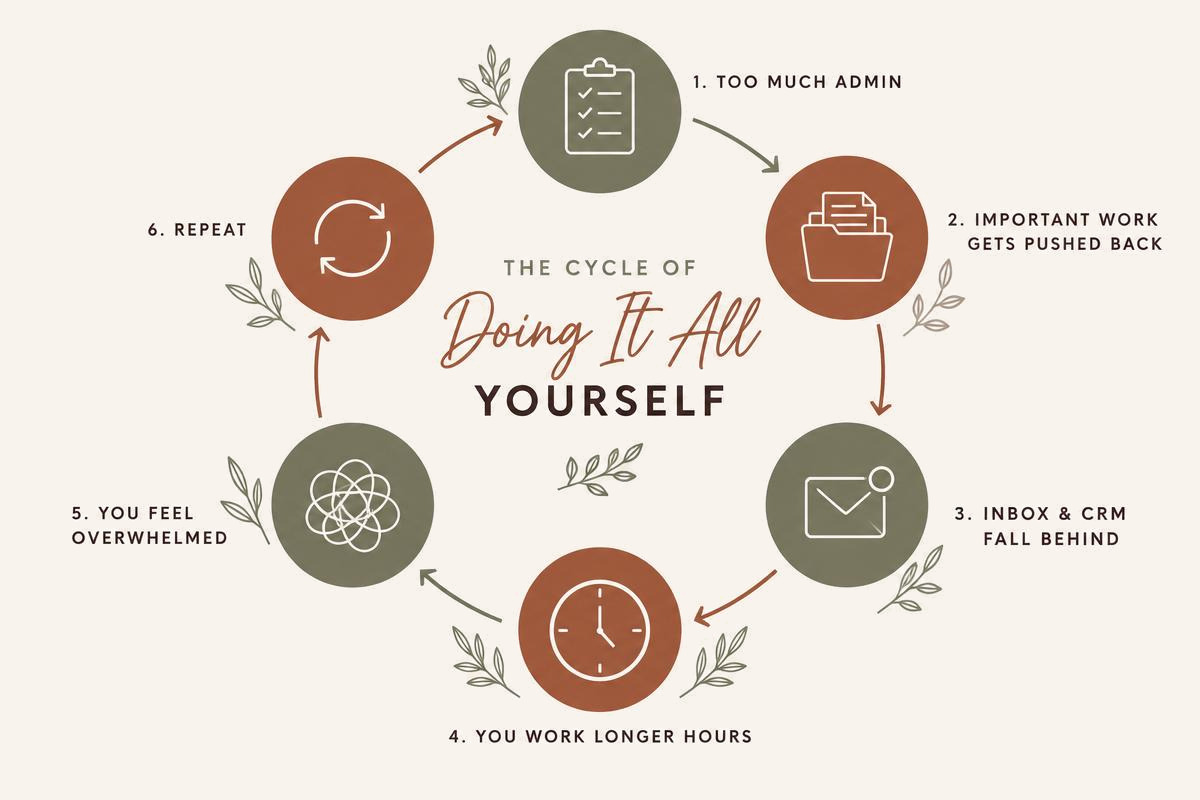
When you're busy managing clients, answering emails and keeping your business running, website updates can easily fall to the bottom of the list. You tell yourself you'll get round to them next week, but next week becomes next month.
That's where a little support can help.
At Less Faff VA, we help business owners take care of the everyday tasks that keep their businesses organised and moving forwards. Depending on your requirements, that can include content updates, blog uploads, proofreading, research and other administrative and marketing support.
You don't always need to start from scratch, invest in a complete redesign or spend a fortune to improve your online presence. Sometimes, you just need someone to help you work through the small jobs you've been putting off.
Your website should grow alongside your business, not become another item on an endless to-do list.
A few thoughtful updates can go a long way. Less faff, more focus.
If your website could do with a little attention, let's have a chat about how we can help.