
Organisation ·
When Your To-Do List Never Seems to End
The list keeps growing no matter how hard you work. What breaks the cycle isn't more hours — it's taking things off your plate.
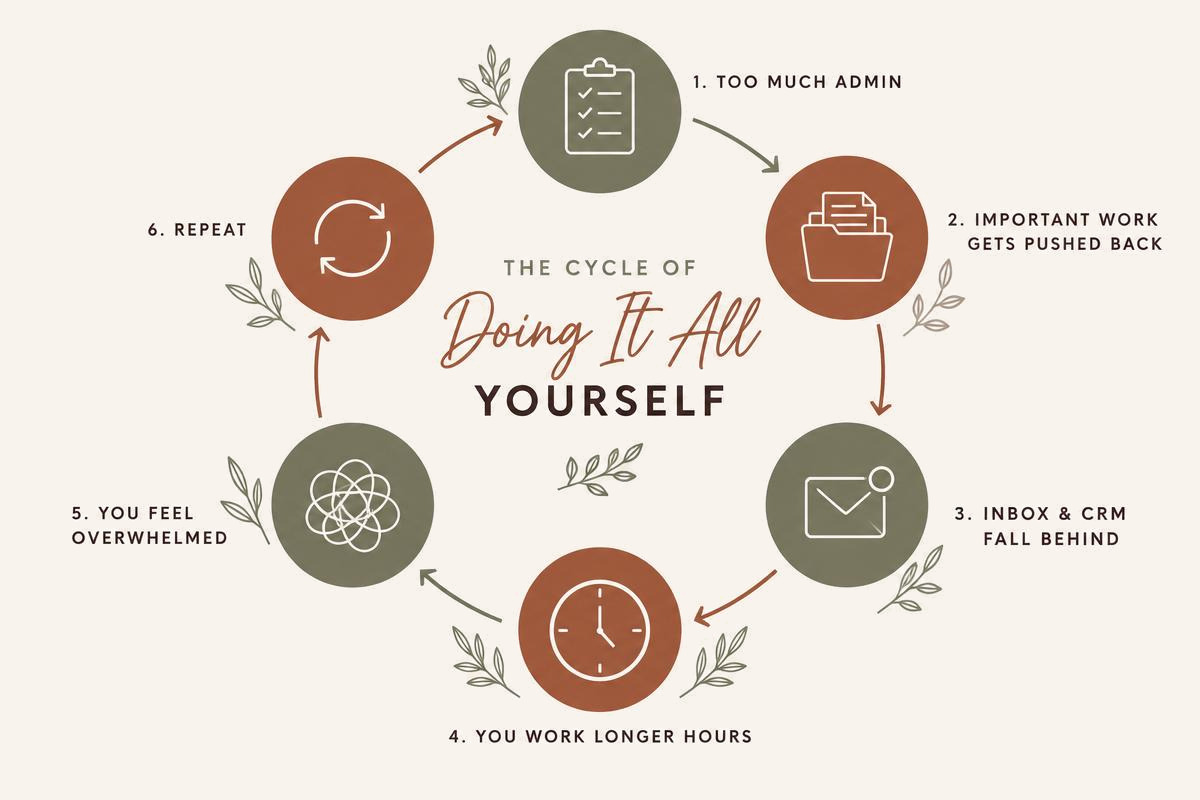
I see this pattern all the time with the business owners I work with, and honestly, I used to fall into it myself before I understood what was actually happening.
It starts with a to-do list that keeps growing. New tasks land faster than you can clear the old ones, and no matter how many hours you put in, it never seems to shrink.
At first, you tell yourself it's just a busy week. Things will settle down once you've got through a few deadlines or finished that big project. You just need to push a little harder, get a few more things ticked off and then you'll finally have some breathing room.
But that breathing room never quite arrives.
The Firefighting Cycle
So you start firefighting.
The admin that's shouting loudest gets your attention, and the work that actually grows your business, the strategy, the outreach, the bigger projects, gets filed under "later".
Later has a habit of never arriving.
An email needs answering, so you put off working on your next marketing campaign. A client needs a document, so you postpone reviewing your business goals. There's a meeting to arrange, a spreadsheet to update and three people waiting for a follow-up.
Each task feels important in the moment, and some genuinely are. The problem is that when everything demands your attention, it's almost impossible to distinguish between what's urgent and what will make the biggest difference in the long run.
You end up spending your days reacting rather than planning. You're constantly doing something, yet the things that would move your business forwards keep getting pushed further down the list.
And that's an exhausting way to work.
When the Small Things Start Adding Up
Bit by bit, you fall behind.
The inbox gets away from you. The CRM hasn't been touched in weeks. Follow-ups slip through. Deadlines that felt miles off are suddenly right on top of you.
You might have important client information buried in old emails, appointments that need rearranging or documents sitting unfinished in a folder somewhere. None of these things necessarily feels like a disaster on its own, but together they create a constant sense that something is being missed.
And even when you're not actively working, it's difficult to switch off.
You're thinking about the email you haven't answered, the client you need to chase and the task you promised yourself you'd finish before the end of the week. Your to-do list follows you around, taking up space in your head even when you're supposed to be having a break.
That's when the stress creeps in.
You feel stretched thin and like you're never quite catching up, no matter how hard you're working. And that low hum of overwhelm makes everything harder, including the decisions that would actually sort the problem out.
When you're constantly firefighting, it's difficult to find the time or energy to step back and look at why the fires keep starting in the first place.
Working More Isn't Always the Answer
So you do what most of us do.
You work more.
Evenings, weekends, the bits of time that were meant to be yours, all get swallowed by admin. You might sit down after dinner to clear a few emails or spend Sunday evening getting organised for Monday morning.
You tell yourself it's temporary. Once you get through this backlog, things will be different.
And here's the frustrating part: it barely moves the needle. You end up busier, not further ahead.
You can only stretch your time so far. There are still only so many hours in a day, and adding more working hours doesn't necessarily mean you're making better use of them.
The issue isn't always that you're disorganised or not working hard enough. Sometimes, the workload has simply grown beyond what one person can realistically manage alongside everything else a business owner is responsible for.
You're trying to be the strategist, the salesperson, the client contact, the administrator and the person keeping all the systems up to date.
That's a lot for one person to carry.
Breaking the Cycle
You can't outwork this one.
More hours don't fix a workload that's fundamentally too much for one person. They just delay the moment you notice it.
What actually breaks the cycle is taking things off your plate before it fills up again.
That starts with looking honestly at your workload. Which tasks genuinely need your experience, judgement or input? And which ones need doing well but don't necessarily need you to do them personally?
You might need to lead a client meeting, make an important business decision or develop a new service. Those are the things that benefit from your expertise.
But managing your inbox, updating your CRM, arranging appointments, preparing documents and keeping routine follow-ups on track? These are tasks that someone else can help you manage.
Delegating doesn't mean losing control. With the right support and clear processes, you can stay informed about what's happening without personally handling every detail.
And you don't have to hand everything over overnight. Start with the tasks that take up the most time, interrupt your focus or keep getting pushed to the bottom of the list. Even a little breathing room can make a real difference.
Getting Your Time Back
That's the bit I love doing.
Taking the inbox, the CRM, the follow-ups and the everyday admin off your hands isn't about doing less. It's about giving you back the time and headspace for the work only you can do.
Imagine starting the week with an organised inbox, up-to-date records and a clear picture of what needs your attention. Imagine finishing the working day without a mental list of unfinished admin following you into the evening.
You'd have more time to focus on your clients, develop your business and work towards the goals that made you start it in the first place.
More importantly, you'd have the opportunity to build a business that works for you, rather than one that requires you to be available for everything, all the time.
You don't have to wait until you're completely overwhelmed to ask for help. The earlier you recognise the pattern, the easier it can be to put the right support in place.
If any of this sounds a little too familiar, let's have a chat about what could come off your plate. At Less Faff VA, we can help you take control of the everyday admin, get organised and make more room for the work that matters.
Get in touch and let's get your time back.